Soak a cotton pad with Clinique Clarifying Do-Over Peel, sweep it over cleansed skin and leave it on. Clinique’s schedule is 2 to 3 nights a week, with serum and moisturizer after.
It’s a leave-on exfoliant built on a 32% Micro-Acid+ Complex, a 7-acid blend of AHAs, a BHA and a PHA. The label requires sunscreen during use and for the week after.
On peel nights it replaces Clarifying Lotion in Clinique’s routine. Skin type is where the listings disagree (retailer pages checked in October 2026). Clinique’s own text says dry combination to oily, while Notino lists all skin types.
How to Apply Clinique Clarifying Do-Over Peel

Put it on clean skin with a saturated cotton pad, sweep it across the face, keep it away from the eyes and don’t rinse. Clinique US confirms in its product Q&A on Ulta that the peel stays on the skin.
- Remove makeup and cleanse your face.
- Saturate a cotton pad with the peel.
- Sweep the pad over your face, skipping the eye area.
- Leave it on. No rinsing.
- Apply a serum.
- Finish with a moisturizer.
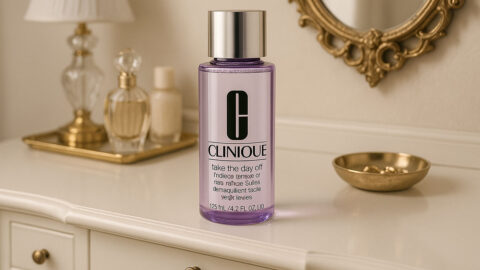
If you wear makeup, melt it off before the regular cleanse. A cleansing balm such as Clinique’s Take The Day Off balm handles that part.
The US and UK labels say to saturate a cotton pad.
Listings that carry Clinique’s longer directions, LookFantastic Netherlands for one, ask for less, which is a dropper’s worth of liquid on a pad. They also put the lips off limits along with the eye area.
Follow the packaging if you want the current wording. For a first week, the dropper version is the one I’d pick.
How Often Should You Use Clinique Clarifying Do-Over Peel?

The label says 2 to 3 nights a week. Anyone new to peels starts at once a week until the skin adjusts, according to the longer directions on Parfumdreams and Breuninger.
| Situation | Frequency | Source of the direction |
|---|---|---|
| New to exfoliation | Once a week until skin adjusts | Clinique directions on Parfumdreams, Breuninger |
| Established use | 2 to 3 nights a week | Clinique label, US and UK listings |
| Irritation appears | Cut back, stop if it persists, consult a physician | Clinique label |
None of the listings checked in October 2026 mention nightly use. Three nights is the ceiling.
Can you use it in the morning?
Clinique recommends night use, because skin is in its optimal state of repair then. Its own directions say after cleansing, 2 to 3 times a week.
Other sources are looser. Parfumdreams says day use is possible with SPF 15 or higher and limited sun exposure, and Notino lists both day and night under “when to use.”
Night still wins. Clarifying Lotion already covers every morning in Clinique’s pairing, and a daytime peel brings a sun-exposure problem with no benefit any source identifies.
Using the Peel With Clarifying Lotion and Retinoids

Skip Clarifying Lotion on peel nights and use it on the other nights and every morning. Clinique retinoid products can share the regimen, but dermatologists quoted outside Clinique advise separating retinoids and exfoliating acids by night.
On a peel night you apply the peel and nothing else from the lotion side, so there’s no layering. That split gives a multi-level exfoliation without doubling up on the same night. The lotion side has its own steps in this walkthrough for using Clarifying Lotion.
Retinoids and retinol
Clinique says its own retinoid, retinol and vitamin A products can be used alongside the peel (Parfumdreams, Breuninger).
Dermatologists are more cautious. Healthline reports that experts generally advise against using an AHA and retinol at the exact same time, because of dryness and irritation. Dr. Aegean Chan, speaking to Women’s Health South Africa, suggests dropping retinol to 4 or 5 nights a week and putting the AHA on the other nights.
Separate nights is the simple answer. Three peel nights plus four retinoid nights fills a week, and neither product lands on top of the other.
Clinique’s guidance names its own retinoid products only. With a prescription retinoid or another brand’s, ask the prescriber before adding a peel.
Sunscreen Requirements While Using the Peel
Wear sunscreen and limit sun exposure while using the peel and for a week after the last use. That is the wording on Clinique’s US, UK and Australian listings.
FDA’s January 2005 labeling guidance says AHA cosmetics can raise sun sensitivity during use and for up to a week after use stops. The peel’s ingredient list includes glycolic and lactic acids, both AHAs.
In FDA-run tests, four weeks of glycolic acid cream raised sensitivity to UV-induced reddening by 18 percent and doubled sensitivity to UV-induced cellular damage on average (FDA, citing Kaidbey et al., 2003).
The effect faded within a week of stopping. The test product was a cream, not a peel with a 32% acid complex, so the 18 percent is a reference point and not a prediction for this product.
The Clinique label on the US, UK and Australian listings requires sunscreen but gives no SPF number. LookFantastic Netherlands, which carries Clinique’s directions, says SPF 15 or higher. The American Academy of Dermatology goes further and recommends broad-spectrum, water-resistant, SPF 30 or higher, and says SPF 30 blocks 97% of UVB rays.
SPF 15 is Clinique’s floor. On peel days and for the week after, SPF 30 is the better target.
Reapplication is the awkward part of a daytime routine with makeup. This guide to reapplying sunscreen over makeup covers the methods.
Count the week from the last peel night, not from the last day you remember using it.
Results Timeline and What Surfacing Impurities Mean

Clinique’s listings claim more radiant-looking skin and better-looking clarity after 1 use. After 1 week they claim smoother-looking texture with fine lines visibly improved, and after 4 weeks pores that appear less noticeable. The sample was 30 women, as listed on David Jones’ product page.
Every claim is worded as how skin looks, and the sample is small. The figures are Clinique’s own marketing claims. Marks & Spencer’s Irish listing, repeating Clinique’s footnote, says a third party ran the 4-week test on 30 subjects aged 28 to 53 who used the product 8 times.
Is it purging or a breakout?
Purging usually runs 4 to 6 weeks, according to Rebecca Thiede, MD, a dermatologist at Banner Health.
Clinique-sourced directions on Parfumdreams say deeper impurities may surface because the peel speeds cell renewal. They give no duration, so the timeframe comes from dermatologists and not from Clinique.
Banner Health describes purging as acids and retinoids pushing already-forming clogs to the surface faster. Tahmina Mahmood of Duly Health and Care adds that it improves even if you keep using the product, while a real breakout or irritation keeps going or gets worse the longer you keep applying it.
The outer limit is where the sources split. Banner Health says to see a provider past 6 weeks, while the dermatologists SELF interviewed put purging at roughly 4 to 8 weeks.
I’d use the earlier date. Bumps still arriving past week 6 deserve a dermatologist’s opinion, not more patience.
Purging covers blemishes only. Burning, swelling and blisters fall under irritation.
Which Skin Types Suit the Peel, and When Should You Cut Back or Stop?

Clinique’s own listings say dry combination to oily skin. Other retailers list wider ranges, and none of them explains the difference.
Skin types the label covers
| Listing | Skin types stated | Wording origin |
|---|---|---|
| David Jones, Jarrold, Ulta | Dry combination to oily | Clinique text |
| LookFantastic UK | Normal to oily | Retailer copy |
| Sephora India | Normal, oily, dry, combination | Retailer copy |
| Notino | All skin types | Retailer copy |
Follow the manufacturer’s range. Dry skin sits outside it, and “all skin types” on a retailer page is not a Clinique statement.
Signs to cut back or stop
FDA’s adverse-event data gives a concrete picture of what irritation from AHA skin products looks like.
FDA logged 114 adverse reports for AHA skin care products between 1992 and February 2004. Burning, dermatitis or rash and swelling led the list, followed by pigment changes, blisters or welts, and peeling and itching.
The more serious reactions in that data appeared most often with products that exfoliate the most, such as skin peelers, and report frequency fell in later years. Clinique’s cut-back rule needs a trigger, and this list is a usable one.
FDA’s guidance for BHA products, which covers the peel’s salicylic acid, adds two steps. Test on a small area of skin before applying widely, and stop and consult a physician if irritation or prolonged stinging appears.
FDA also advises keeping BHA products away from infants and children.
What Is in the Micro-Acid+ Complex?

Clinique describes the complex as a 7-acid blend of AHAs, BHA and PHA. The ingredient list names the seven: glycolic, lactic, salicylic, lactobionic, pyruvic, tartaric and citric acids.
The seven acids
| Acid | Class | What the sources say |
|---|---|---|
| Glycolic | AHA | With lactic, the most common cosmetic AHA (FDA) |
| Lactic | AHA | Same FDA grouping as glycolic |
| Salicylic | BHA | Most common cosmetic BHA, though chemists say it is not a true BHA (FDA) |
| Lactobionic | PHA | Larger molecule, slower penetration, better tolerated (PubMed Central review) |
| Tartaric | AHA | Classified as an AHA in Clinique’s product text |
| Pyruvic | AHA | Classified as an AHA in Clinique’s product text |
| Citric | AHA, rarely cited as BHA | Clinique lists it as an AHA; FDA says it is more commonly called an AHA |
Clinique’s product text classifies glycolic, lactic, citric, tartaric and pyruvic acids as AHAs, salicylic acid as a BHA and lactobionic acid as a PHA. The listings reviewed don’t give each acid’s share of the 32%.
The same PubMed Central review warns that aggressive exfoliation can compromise the epidermal barrier. That’s the practical case for staying inside the label’s frequency.
FDA’s page on AHAs records the Cosmetic Ingredient Review panel, the industry’s own safety body, finding glycolic and lactic acid products safe at AHA concentrations of 10 percent or less, in products with a pH of 3.5 or greater, with sun protection in the directions. Clinique doesn’t say how much of the 32% is glycolic or lactic acid, so the two figures can’t be compared directly.
Other ingredients and the alcohol question
Witch hazel extract is the astringent botanical Clinique also uses in Clarifying Lotion, per a Welsh Country product write-up. Padina Pavonica thallus extract is an algae extract that LookFantastic UK describes as hydrating, with believed soothing properties. The same retailer says the yeast extract supports the skin’s natural cell renewal process.
Alcohol Denat. is the second ingredient, right after water. FDA requires ingredients in descending order of predominance, with an exception for anything at 1% or below, so it is one of the larger components.
Whether that matters is disputed. Curology’s dermatology team says alcohol denat. can strip oils and cause dryness or irritation in dry or sensitive skin.
Lab Muffin Beauty Science reviewed the studies and concluded alcohol is not much of a concern in skincare, partly because formulas pair it with moisturizing ingredients.
For dry skin the question is mostly settled by the label range. Clinique states the peel for dry combination to oily, not dry.
Clinique Clarifying Do-Over Peel FAQ
Which kind of exfoliant is Clinique Clarifying Do-Over Peel, chemical or physical?

Chemical, since the acids loosen and shed surface skin cells and the ingredient list contains no scrub particles.
FDA describes AHA-containing products as causing exfoliation, or shedding of the surface skin.
Does the peel treat acne?
No listing reviewed presents it as an acne treatment. Clinique says it removes dead skin cells, dirt and oil that can clog pores and lead to breakouts.
FDA treats products intended to treat acne as drugs, a different category from cosmetics.
Is Clinique Clarifying Do-Over Peel fragrance-free?
Yes. David Jones lists it as 100% fragrance free, dermatologist tested and allergy tested, and the ingredient list names no fragrance.
Those tests don’t remove the acid-related precautions on the label.
Can you use the peel during pregnancy?
The listings reviewed don’t address pregnancy, so ask an obstetrician or dermatologist first. A narrative review reported by Dermatology Times in September 2026 says salicylic acid peels are avoided in pregnancy, and glycolic or lactic peels are preferably deferred for elective cosmetic use.
The peel contains all three of those acids.
Judging Clinique Clarifying Do-Over Peel After Four Weeks
Judge the peel at week 6, not week 4. Clinique’s 4-week pore result lands inside the 4 to 6 weeks dermatologists allow for purging, so a week-4 verdict can’t separate a working peel from one that is mid-purge.
Irritation gets checked first, at any week. No purging window covers burning, swelling or blisters, so any of those ends the trial immediately. At week 6, look at the blemish trend. Frequency comes last, since it’s the only adjustable variable left once the first two checks pass.
The cost of this order is two extra weeks on the schedule before a verdict, which suits only skin free of burning, swelling and blisters.
This position reflects listings and sources verified in October 2026, and it shifts if Clinique revises the label’s frequency or sun-protection wording.

She started writing on the site after fielding the same questions from clients and friends often enough to just write the answers down: which red won't turn orange on a warm undertone, how to keep lipstick from feathering into fine lines, why a "12-hour" formula rarely survives dinner.
Every review on the site follows the same rule she uses with paying clients: wear it first, then decide if it's worth recommending.
- How to Make Eyeliner Last Longer Without Smudging - August 31, 2026
- How to Make Eyeshadow Last Longer All Day - August 29, 2026
- How to Find Your Undertone in 5 Easy Steps - August 27, 2026