Clinique Clarifying Lotion goes on after cleansing and before moisturizer. Wet a cotton ball, sweep it over your face and neck, stay away from the eyes and lips, and do it again at night.
It’s Step 2 of Clinique’s 3-Step Skin Care System. The lotion comes in 5 skin-typed formulas, and the numbers run from 1.0 for sensitive skin up to 4 for oily skin.
Frequency is where sources split. The label says twice a day, but the American Academy of Dermatology (2015 news release) limits at-home exfoliation for dry or sensitive skin to once or twice a week.
How to Use Clinique Clarifying Lotion Step by Step

Wash, sweep the lotion over your face and neck with a cotton ball, keep it off your eyes and lips, then moisturize. Morning and night. Since it’s Step 2 of the system, it always sits between cleanser and moisturizer.
- Cleanse with Clinique’s All About Clean Liquid Facial Soap or your usual cleanser, rinse, and pat dry.
- Dampen a cotton ball with the lotion.
- Sweep it gently over your face and neck.
- Stay clear of the eye area and lips.
- Let it dry. There is no rinse step.
- Follow with a moisturizer.
Wearing makeup? Lift it first with Clinique’s cleansing balm, then wash. The soap has less to deal with, and the lotion lands on clean skin.
Clinique’s directions say cotton ball, though some retailer listings (Argos, for one) say pad. Use whichever you have. Pressure doesn’t matter, because the salicylic acid does the exfoliating and scrubbing only adds irritation.
The directions cover the neck too, so carry the sweep down past the jawline.
Clinique’s pitch for this step is that exfoliated skin takes up moisturizer better. Skipping the last step wastes that.
Choosing the Right Clinique Clarifying Lotion Number for Your Skin Type

Go by skin type. Clinique states that specific ingredients vary by formula, so the number is the decision that matters most.
| Number | Skin type | Clinique’s wording |
|---|---|---|
| 1.0 | Sensitive | Extra-gentle, alcohol-free |
| 1 | Very dry | Mild |
| 2 | Dry combination | Gentle |
| 3 | Combination oily | Great for combination oily skin |
| 4 | Oily | Formulated for oily skin |
Older listings call 1.0 “dry, sensitive” and 4 “very oily”. Current Clinique pages use the wording above.
Bottles come in 200 ml and 400 ml across retailer listings. Buy the small one first if you are unsure of your number.
Clinique pitches the benefit differently depending on the number. Oilier skin gets the line about twice-daily exfoliation helping minimize excess oil and keep pores clear, while for drier skin the point is clearing surface flakes that block moisture absorption.
Between two numbers, buy the milder one. The American Academy of Dermatology (AAD) warns that exfoliation can increase redness or breakouts for some people, and a gentler formula is easier to step up from than a harsh one is to recover from.
One point worth confirming. Clinique’s UK 1.0 product page, its US and Canada Clarifying Lotion pages, and Boots all describe five skin-typed formulas. Nothing turned up that names a sixth, so the five numbers above are the working set.
Lotion 1.0 versus Lotion 1

Lotion 1.0 is alcohol-free, and Clinique lists it as free of drying alcohol. It’s also fragrance free and labeled safe for sensitive skin.
Lotion 1 is the mild formula for very dry skin. Retailer ingredient panels list alcohol denat. in it, which is the main difference from 1.0.
If your skin stings easily, try 1.0 first. Lotion 1 suits dry skin that handles a standard formula.
Where Acne Solutions Clarifying Lotion differs

Bluemercury lists Clinique’s Acne Solutions Clarifying Lotion at 1.5% salicylic acid, inside the 0.5 to 2 percent range the FDA permits for over-the-counter acne products (21 CFR 333.310).
It belongs to Clinique’s Acne Solutions line and is medicated, so it is not one of the skin-typed numbers.
- Shake well before use
- Follow with Acne Solutions All-Over Clearing Treatment
- Same cotton ball sweep over face and neck, same twice-a-day label
- Keep it off the eye area and lips
If the bottle says Acne Solutions, follow its directions, not the ones above.
How Often Should You Use Clinique Clarifying Lotion?

Clinique’s directions say twice a day, morning and night. Dermatologist guidance runs lower, especially for dry and sensitive skin, so start below the label and work up.
The label calls for 2 uses a day on every number. The AAD’s 2015 news release says oily skin can go as often as once a day, and puts at-home exfoliation for dry or sensitive skin at once or twice a week. In practice, 26% of the 27 routines built around Lotion 1.0 apply it both morning and evening (Skinsort, updated June 2024).
The two sources do not measure the same thing. Clinique formulates each number for its skin type and labels it for twice-daily use, while the AAD is talking about at-home exfoliation in general, acids, scrubs and brushes included.
Neither tested the other’s claim. Read the gap as a reason to ramp up, not as a verdict.
For a workable ramp, numbers 2, 3 and 4 can start at once a day and add the second application after a week or two of comfortable skin. Numbers 1 and 1.0 start at once or twice a week, and build toward the label only if skin stays calm.
Real routines run looser than the label anyway. One Well.ca reviewer of Lotion 3 keeps Lotion 1 on hand and uses both from winter into spring.
Where Clinique Clarifying Lotion Fits in Your Routine Order

Cleanser first, then the lotion, then a serum if you use one, then moisturizer, with SPF as the last layer in the morning. Clinique’s system defines cleanse, exfoliate, moisturize. The SPF slot comes from retailer usage notes (Argos) and dermatologist guidance, while the serum slot is a common routine habit that Clinique’s directions do not cover.
| Moisturizer | Developed for | Feel |
|---|---|---|
| Dramatically Different Moisturizing Lotion+ | Skin types 1 and 2 | Creamy lotion |
| Dramatically Different Moisturizing Gel | Skin types 3 and 4 | Oil-free gel |
| Dramatically Different Hydrating Jelly | All skin types | Lightweight water-jelly |
Clinique tailors every step of its system to the same skin type numbers, so the moisturizer follows the number on your lotion. Clinique also lists a richer Dramatically Different Moisturizing Cream alongside these.
Before the lotion goes the All About Clean Liquid Facial Soap, which Boots also lists in an oily-skin formula. A serum, if you use one, slots between lotion and moisturizer, though that step is not part of Clinique’s system. In the morning SPF goes last, and Argos’s usage notes place it there too.
An SPF of 30 blocks 97% of UVB rays, according to the AAD, which recommends broad-spectrum, water-resistant sunscreen at SPF 30 or higher.
Clinique sells Dramatically Different Moisturizing Lotion+ Broad Spectrum SPF 35 for this slot, and the AAD points out that some moisturizers already carry SPF. If you spend the day outdoors, topping up your SPF over makeup is worth learning, because the AAD advises reapplying every two hours outside.
At night the routine stops at moisturizer.
Is Clinique Clarifying Lotion a Toner or an Exfoliator?

Exfoliator, going by Clinique’s own product copy. It says its exfoliating lotion is different from a toner, because it is formulated with exfoliating ingredients that help remove dead cells from the skin’s surface.
The labeling is not consistent, though. As of October 2026, Clinique’s UK page still calls it the US’s number one toner (a claim Clinique’s US page sources to NPD sales data for the 12 months ending October 2020), and Bluemercury files Lotion 3 under its toner collection.
Current listings also sell it as Clarifying Lotion Twice A Day Exfoliator, which puts the category in the product name. Treat it as an exfoliant with a frequency ceiling, something a plain toner does not have.
Salicylic acid does most of the work, and Clinique credits it with clearing and unclogging pores. Witch hazel helps refine skin, per Clinique, and acetyl glucosamine helps balance and smooth it. Retailer panels for Lotions 1, 2 and 3 also list alcohol denat., a solvent that Lotion 1.0 leaves out, plus glycerin and sodium hyaluronate for moisture binding.
The acid exfoliates the stratum corneum, and a 2015 review by Arif in Clinical, Cosmetic and Investigational Dermatology describes its action as desmolytic, meaning it disrupts the junctions between skin cells. The same review credits its comedolytic effect, which is why it shows up in acne products.
Sources disagree on what to call it. Clinique and most retail copy say BHA, while Arif notes that Kligman described salicylic acid as a beta hydroxy acid and Yu and Van Scott classified it as a phenolic aromatic acid. The exfoliating effect is the same either way.
On alcohol denat., the Cosmetic Ingredient Review Expert Panel’s 2008 final safety assessment (International Journal of Toxicology) judged it safe as used in cosmetics, with safety resting on the denaturant used. Safe in the bottle is a different question from comfortable on dry skin, which is the reasoning behind Lotion 1.0.
When Clinique Clarifying Lotion Is Too Much for Your Skin
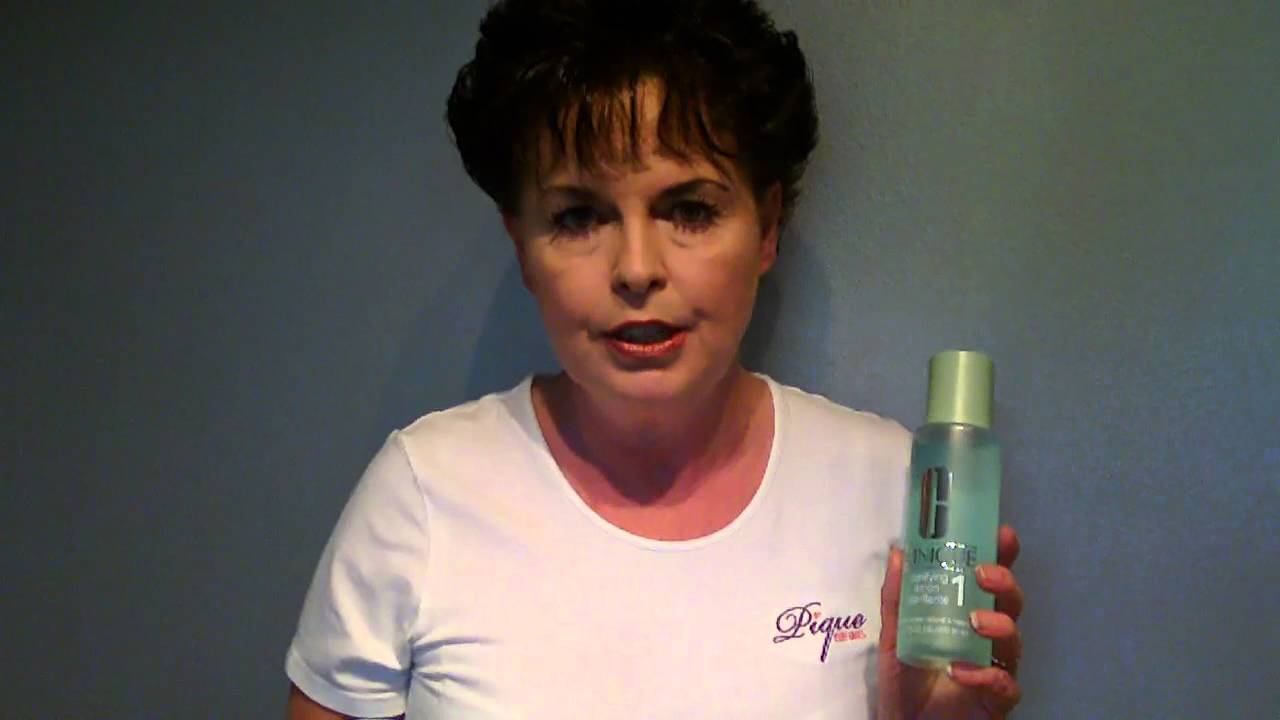
Lingering redness, stinging, tightness or new breakouts mean the lotion is too strong or used too often. Cut frequency first, drop a number second, and see a dermatologist if skin does not settle.
Signs your skin has had enough
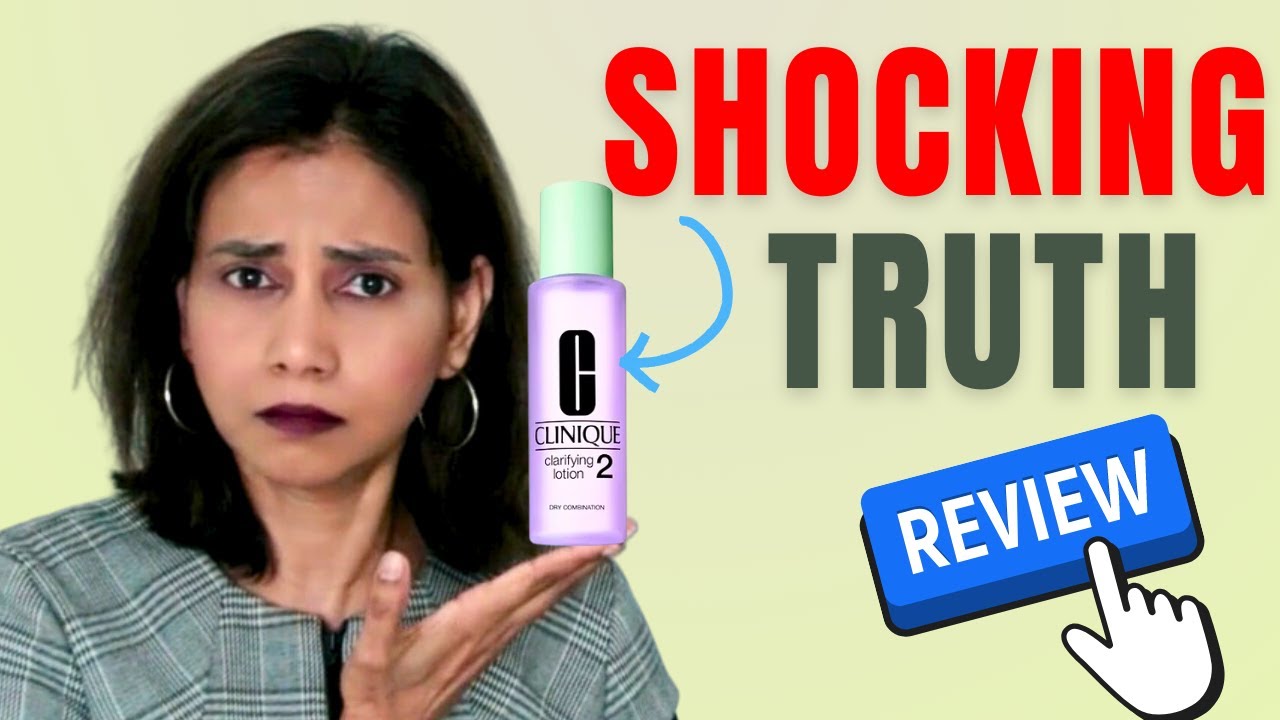
The AAD describes over-exfoliated skin as red and irritated, and says sensitive skin may sting or burn after a product goes on.
- Redness that stays after the lotion dries
- Stinging or burning on application
- Tightness, or new flaking
- More breakouts, not fewer
Strength is a real variable. A Marks & Spencer reviewer calls Lotion 4 very strong and says it dries out anyone who is not very oily.
- Drop to once a day, or every other day.
- Move one number milder (4 to 3, 3 to 2) and keep the moisturizer step.
- Stop the lotion until the redness settles, then restart at the lower frequency.
Cases where you should skip it
- Open cuts or wounds, which the AAD says never to exfoliate over (news release, December 2016)
- Sunburn, under the same AAD rule, so wait until skin heals
- If Lotion 1.0 still stings, exfoliation may not suit your skin, and the AAD says it is not for everyone
- The Acne Solutions version alongside other acne medication, since federal labeling rules for over-the-counter acne products (21 CFR 333.350) tell you to use only one topical acne medication at a time if irritation occurs
Skipping a few days costs nothing. Pushing through irritation prolongs it.
Clinique Clarifying Lotion FAQ
Can you use Clinique Clarifying Lotion with retinol?
Yes, on separate schedules. Clinique’s usage directions say nothing about retinol, and brands such as Medik8 advise salicylic acid in the morning and retinol at night.
Cut back one of the two if skin stings or flakes.
How long does it take to see results from Clinique Clarifying Lotion?

Clinique reports a visible change right away. Its clinical testing of the lotion on 31 women found skin looked smoother and more radiant, with less-noticeable pores.
Blemishes run slower. Medical News Today says topical acne treatments, salicylic acid included, can take 6 to 8 weeks to show results.
Does Clinique Clarifying Lotion clear blackheads?
No, not by Clinique’s claim. The company says Lotion 3 sweeps away dulling flakes and excess oil that can lead to breakouts, and a 2015 review by Arif in Clinical, Cosmetic and Investigational Dermatology describes salicylic acid as comedolytic.
For blemish treatment, Clinique sells the medicated Acne Solutions version.
Is Clinique Clarifying Lotion safe to use during pregnancy?
Usually, yes, for a limited time and with your obstetrician’s or dermatologist’s agreement. The American Academy of Dermatology calls salicylic acid generally safe in limited use during pregnancy and still advises checking with a doctor first.
When to Switch Clinique Clarifying Lotion Numbers
Switch Clinique Clarifying Lotion numbers only after two weeks at a frequency your skin tolerates. Persistent redness or tightness calls for the next milder formula, and lingering shine with calm skin calls for the next stronger one.
Order matters here. Settle on a comfortable frequency at your current number, hold it while you watch redness, shine and flaking, and only then change one number, never two. One change at a time isolates the cause when skin reacts, while a two-number jump removes that clarity.
Every switch carries a trade-off. A stronger number buys oil control and costs comfort, and a milder number buys comfort and costs shine control.

She started writing on the site after fielding the same questions from clients and friends often enough to just write the answers down: which red won't turn orange on a warm undertone, how to keep lipstick from feathering into fine lines, why a "12-hour" formula rarely survives dinner.
Every review on the site follows the same rule she uses with paying clients: wear it first, then decide if it's worth recommending.
- How to Make Eyeliner Last Longer Without Smudging - August 31, 2026
- How to Make Eyeshadow Last Longer All Day - August 29, 2026
- How to Find Your Undertone in 5 Easy Steps - August 27, 2026