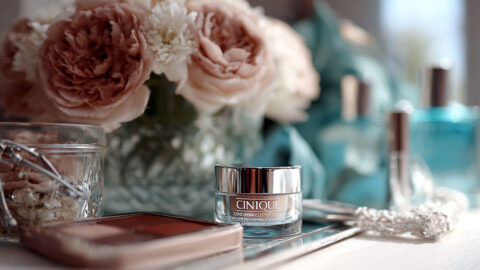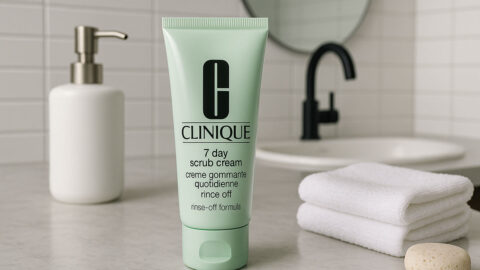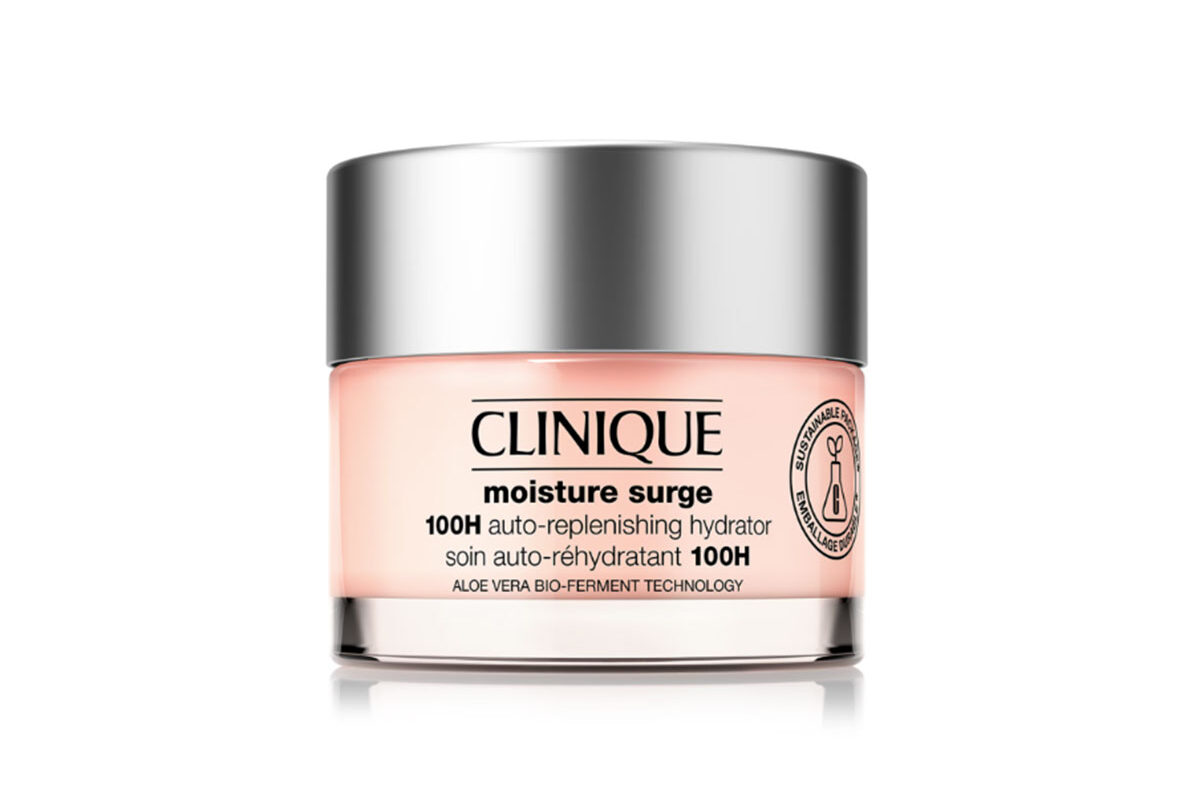
Apply Clinique Moisture Surge to clean skin in a thin, even layer, morning and night, and put sunscreen on top in the morning. That covers the 100H, the oil-free gel-cream most people mean when they say Moisture Surge.
The rest of the range (Intense 72H, the SPF 28 Sheer Hydrator, the Overnight Mask and the Eye 96-Hour Hydro-Filler Concentrate) each has its own directions.
The 100-hour label doesn’t change the schedule. Clinique’s directions set no reapplication interval beyond morning and night (product copy on retailer listings, as of October 2026).
How to Apply Clinique Moisture Surge Step by Step

Clinique’s directions for the 100H fit on one line, so the routine below is mostly about order and amount.
- Cleanse and pat dry, leaving the skin slightly damp. The American Academy of Dermatology (AAD) advises applying moisturizer while skin is still damp after washing.
- Put any serum on first. Clinique’s own routine places serum straight after cleansing, before the hydrator.
- Take a small amount of the hydrator and spread it over the face in a thin layer. Add more only where skin feels tight.
- Massage it in gently until the surface no longer feels wet.
- In the morning, sunscreen comes next, then makeup. At night you can stop here, or add the Overnight Mask, which Clinique directs for evening use.
How much Moisture Surge to apply

Clinique gives no measured amount for its face hydrators. It only measures the mask and the eye product. The 100H and Intense 72H just say morning and night on clean skin, the 5-minute mask gets a generous layer that you tissue off, and the eye concentrate gets a pea-sized amount.
Start with less than you think you need. Add more over dry areas.
Some guides call for a dime-sized scoop on the face, but that isn’t Clinique. In Clinique’s own list of uses, the dime reference belongs to the frizz tip.
Where Does Moisture Surge Go in a Morning and Night Routine?

After cleanser and serum, before sunscreen and makeup. Clinique’s own routines follow that sequence.
Morning order
In the morning that means cleanser, serum, hydrator, sunscreen, makeup.
Clinique’s SPF 28 product page puts any serum straight after cleansing. It then applies Moisture Surge Broad Spectrum SPF 28 Sheer Hydrator as the moisturizer and sun protection step, with makeup once it absorbs.
The 100H is sold without SPF, so a separate sunscreen takes the SPF 28’s place. The AAD says sunscreen needs about 15 minutes to absorb and protect before you head outdoors.
Night order
Night is the same sequence minus the sunscreen. Cleanse, add a serum if you use one, then the hydrator.
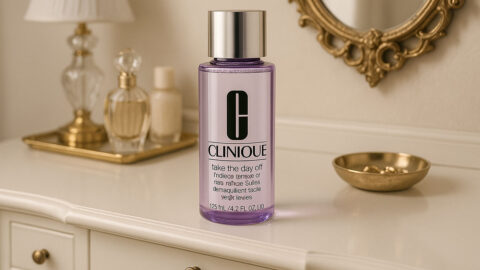
After a full makeup day, start with a cleansing balm like Clinique’s Take the Day Off balm. The hydrator then goes on clean skin, which is what Clinique’s directions specify.
How often most people apply it
Skinsort’s community routines place the 100H at step 4 most often, and 89% use it every day (page last updated August 2026).
Only 33% apply it both morning and evening, so most people use it in a single session. Clinique’s directions say both.
Layering with Active Glow Serum
Active Glow Serum, Clinique’s first serum in the Moisture Surge collection, is built on 5% lactic acid, hyaluronic acid and vitamin C.
The directions listed on Skinsort say to start with 3 drops on clean skin, then follow with an oil-free moisturizer such as the 100H, which Clinique recommends.
Sunscreen is needed daily during use and for the week after. That reminder goes with the lactic acid, which exfoliates dead skin cells.
Can You Use Moisture Surge as a Mask, Makeup Prep or Spot Treatment?

Yes. Clinique lists a 5-minute mask, a dewy highlighter over makeup and a dry-spot fix among the uses of the 100H, and the Intense 72H carries the same mask and dry-spot directions.
The 5-minute mask
A tissue replaces the rinse. Put a generous layer over the whole face, leave it for 5 minutes, then tissue it off.
Under makeup, over makeup
Under makeup, a thin layer gives a moisture boost and doubles as a primer, according to Clinique’s glazed donut skin tip. That tip starts with exfoliation for a smooth base.
Over makeup, the 100H works as a dewy highlighter. Clinique suggests dabbing it along the cheekbones and brow bone, or patting it onto dry spots.
Moisture Surge handles the hydration part of prepping skin before makeup. Primer and exfoliation are separate decisions.
Dry spots and other areas
Dry patches under foundation are the usual reason to reach for the Intense version, and applying makeup on dry skin takes a few extra adjustments.
On knees and elbows, massage it in for a few minutes. Cuticles get the same treatment over each nail bed. For frizz, rub a dime-sized amount between the palms and smooth it lightly over the hair.
Clinique adds that the drier the skin, the harder it is for moisturizer to penetrate. That is why the massage time matters on knees.
For the whole body, Clinique sells a separate Moisture Surge Body Hydrator with a 48-hour hydration claim.
Which Moisture Surge Product Fits Which Step?

The 100H covers daily hydration and Intense 72H is for very dry skin. The SPF 28 Sheer Hydrator takes the morning slot, the Overnight Mask goes on in the evening, and the Eye 96-Hour concentrate stays around the eyes.
The range also includes a serum, a body lotion and other formats, but the five in the table cover the daily steps (Clinique range as of October 2026).
| Product | When to use | How to apply | Sizes |
|---|---|---|---|
| 100H Auto-Replenishing Hydrator | Morning and night | Clean skin, over makeup, or as a 5-minute mask | 15 to 125 ml, varies by market |
| Intense 72H Lipid-Replenishing Hydrator | Morning and night | Alone, under makeup, on dry spots, or as a 5-minute mask | 15, 30, 50, 75 and 125 ml, varies by market |
| Broad Spectrum SPF 28 Sheer Hydrator | Morning only | After serum, before makeup | 1.7 oz (50 ml) |
| Overnight Mask | Evening, once a day | Face and throat, no eye area, no rinse | 30 ml and 100 ml |
| Eye 96-Hour Hydro-Filler Concentrate | Alone or under makeup | Pea-sized amount around the eyes | 15 ml |
Retailers set their own prices. Boots Ireland lists Intense 72H at EUR 35 for 30 ml and EUR 51 for 50 ml (retailer listing, October 2026).
100H or Intense 72H
Oilier skin is the case Clinique US recommends the 100H for. It has the lighter pink gel texture, and it’s the one listed for use as a highlighter over makeup.
Intense 72H is a richer white cream with three types of lipids. Clinique lists it for very dry skin, dry and dry combination.
Clinique tested Intense on women in Siberia during winter, and the listing copy calls the results glowing. Clinique US confirms it contains no SPF and points to the SPF 28 version for sun protection.
The SPF 28 Sheer Hydrator in the morning
It looks opaque going on, so you can see where you have applied it. Start at the center of the face on the highest points, where the sun hits first, then pat or massage outward until it blends in.
Mornings only. At night, Clinique says to switch to the 100H.
Overnight Mask and eye concentrate
The Overnight Mask goes on once a day in the evening, over the face and throat but away from the eye area. Clinique says to use it after the 3-Step routine or any time skin needs a boost.
The eye concentrate takes a pea-sized amount massaged around the eye area. Wear it alone, under makeup, or leave it on as a 3-minute eye mask.
For the eye area, Susan C. Taylor, MD, FAAD, quoted in Skin Inc, suggests the ring finger because it presses the least on thin skin.
Does the 100-Hour Claim Mean You Can Apply Less Often?
No. The hour counts are claims from product testing, not reapplication intervals, and the data behind them comes from small panels.
What the figures measure
- The 100H showed a +174% moisture boost immediately after one use, in clinical testing on 19 women.
- In consumer testing on 110 women, 99% said skin felt deeply hydrated after one week of the 100H.
- The Overnight Mask showed a 98% overnight moisture boost in clinical testing on 21 women.
- Hour claims run 100 hours for the 100H, 72 for Intense 72H and 96 for the Eye 96-Hour Hydro-Filler Concentrate.
These are brand-reported results, taken from Clinique’s product copy as printed on Bluemercury and LookFantastic listings (as of October 2026).
The +174% is a measurement taken after one use. The hours describe how long hydration holds, and the percentages are just what testers said they felt. None of it sets a schedule, and I’d read the hour claims as marketing shorthand.
What the ingredients do

Clinique credits a short list of ingredients for the 100H and Intense 72H results.
| Ingredient | Clinique’s description | Found in |
|---|---|---|
| Aloe bioferment | Lactobacillus, activated aloe water and organic aloe extract powder, fermented so large molecules break into smaller ones | 100H |
| Hyaluronic acid | Moisture-binding; the 100H formula blends two molecular weights | 100H, Intense 72H |
| Activated aloe water plus caffeine | Auto-Replenishing Technology, said to trigger the skin’s own rehydration | 100H, Intense 72H |
| Three types of lipids | Support the moisture barrier to hold hydration in | Intense 72H |
The mechanism wording is Clinique’s own. What the listings back with numbers are the test results above.
Which Skin Types Does Moisture Surge Suit?
Dehydrated skin of any type, including oily skin, because the job of Moisture Surge is to supply and hold water. Skin that lacks oil needs more than that.
Dry skin versus dehydrated skin
Dermatologists draw the line at what is missing. Dry skin lacks oil and is a skin type, while dehydrated skin lacks water and can affect oily skin too (Dr. Brendan Camp, quoted by Reviewed).
They disagree on how far the treatment should split. Dr. Hannah Kopelman says rich, oil-based products can clog pores on dehydrated skin without fixing the water deficit. Dr. Garshick, quoted in Fresh’s skincare guide, takes the other view, that most cases of both respond to the same approach, which is boosting hydration and strengthening the lipid barrier.
The 100H is built around water-binding ingredients, and Intense 72H adds a lipid layer on top. So the line has an answer for either reading.
Oily, combination and normal skin
LookFantastic lists the 100H for all skin types. Sephora Canada lists the SPF 28 Sheer Hydrator for normal, dry, combination and oily skin, and Ballantynes recommends the oil-free Overnight Mask for all skin types.
Oily skin can still be dehydrated, which is exactly the case an oil-free gel-cream addresses.
Sensitive skin and fragrance
Clinique’s copy for the 100H lists dermatologist tested, allergy tested, safe for sensitive skin and 100% fragrance free (Bluemercury listing).
The SPF 28 Sheer Hydrator is less consistent. Dillard’s listing says 100% fragrance free, while Sephora Canada’s says it contains less than one percent synthetic fragrance.
Those two listings disagree, so read the label on the jar you actually buy. Sensitive skin also affects what goes on top, which is the subject of this guide to makeup for sensitive skin.
What Goes Wrong With Moisture Surge, and When Is It the Wrong Pick?

Mostly it goes wrong when the SPF 28 version is the only sunscreen, when a gel-cream is asked to fix very dry skin, when too many new products go on at once, or when the wrong 72-hour product ends up in the basket.
Relying on SPF 28 as your only sunscreen
Clinique says SPF 28 filters up to 96% of UV rays when used as directed, in a moisturizer you can wear daily. The AAD recommends a broad-spectrum, water-resistant sunscreen with SPF 30 or higher, and finds most people apply only 25% to 50% of the recommended amount.
Clinique’s listings for the SPF 28 version make no water-resistance claim, which is one of the AAD’s three criteria. A thin, moisturizer-style layer is the risk with any SPF moisturizer.
For beach days, long drives or sweaty workouts, add a separate SPF 30 or higher sunscreen and top it up. Doing that over makeup is the awkward part, and there is a guide to reapplying sunscreen over makeup.
Dryness a gel-cream cannot fix

AAD dermatologists say consistent moisturizing and gentle habits should bring some improvement within two weeks. If skin is still flaking or burning after that, see a board-certified dermatologist.
For very dry skin the AAD suggests a layer of petroleum jelly over damp skin or over a cream. Neither Moisture Surge hydrator is an ointment, so neither replaces that step.
Reactions and stacking
A “dermatologist tested” label describes a test panel, not your skin.
Susan C. Taylor, MD, FAAD, warns in Skin Inc that using several products at once can cause redness, stinging and dryness. Dermatologists quoted by Business Insider (2020) advise patch testing before putting a new product on the whole face.
Patch test on a small area first, and add only one new Moisture Surge product at a time, serum included.
Mixed-up 72-hour listings
Two Moisture Surge products carry “72” in their names: the older 72-Hour Auto-Replenishing Hydrator, which still appears in some retailer listings and sets, and Intense 72H Lipid-Replenishing Hydrator.
Read the full product name and the texture description before you buy.
Clinique Moisture Surge FAQ
Can I use Moisture Surge with retinol?
Yes. Clinique US states that the 100H can be used with a retinol product (answering a customer question on Ulta).
Apply the retinol first, then the hydrator. That matches the order Susan C. Taylor, MD, FAAD, gives in Skin Inc, with treatments right after cleansing and moisturizer after.
Can I use the 100H around my eyes?
Clinique’s directions for the 100H do not cover the eye area.
The brand sells the Eye 96-Hour Hydro-Filler Concentrate for that spot, and tells you to keep the Overnight Mask away from the eyes.
Is the 100H the same as the older 72-Hour Auto-Replenishing Hydrator?
No. Clinique calls the 100H an upgrade on its earlier fan-favorite, built around an exclusive aloe bioferment.
The older 72-Hour listing names hyaluronic acid and activated aloe water as its key ingredients.
Can I use Moisture Surge on my neck?
Yes. Clinique’s UK directions for the 100H say to smooth it over the face and neck (LookFantastic listing of Clinique copy).
Use the same thin, even layer after cleansing.
Can I mix Moisture Surge with liquid bronzer?
Yes. Clinique’s own tip blends a small amount of the 100H with a liquid bronzer and spreads the mix lightly over the face.
Clinique lists it among the 100H’s multitasker uses.
How to Tell When Clinique Moisture Surge Is Working
A Clinique Moisture Surge hydrator shows its effect within a few days, while Active Glow Serum needs about six weeks. Both timelines come from the American Academy of Dermatology (AAD), which says a moisturizer can plump fine lines in a few days and most products take at least six weeks to work.
Applied to the range, the hydrator sits in the fast group and the lactic acid serum in the slow one. Neither AAD statement draws that split on its own.
Check tightness and fine lines over the first few days. Any stinging, burning or tingling means stop at once. Judge the serum at week six.
The order follows how fast each signal appears, and pulling a product earlier throws away the test, which is the trade-off of waiting.
Stinging is the exception the AAD carves out (checked October 2026).

She started writing on the site after fielding the same questions from clients and friends often enough to just write the answers down: which red won't turn orange on a warm undertone, how to keep lipstick from feathering into fine lines, why a "12-hour" formula rarely survives dinner.
Every review on the site follows the same rule she uses with paying clients: wear it first, then decide if it's worth recommending.
- How to Make Eyeliner Last Longer Without Smudging - August 31, 2026
- How to Make Eyeshadow Last Longer All Day - August 29, 2026
- How to Find Your Undertone in 5 Easy Steps - August 27, 2026