Lipstick comes out of carpet with a dry-cleaning solvent first and a mild detergent solution second. Swap the order and you mostly push the stain around. The solvent breaks down the wax and oil that hold the color, and the detergent picks up the pigment that’s left behind.
Scrape off the excess, blot with the solvent on a white cloth until no color transfers, rinse lightly, and let the spot dry all the way.
One warning from the Carpet and Rug Institute: never pour solvent onto the carpet or let it reach the backing, because it can damage the latex. Keep the liquid on the cloth.
Removing Lipstick Stains From Carpet, Step by Step
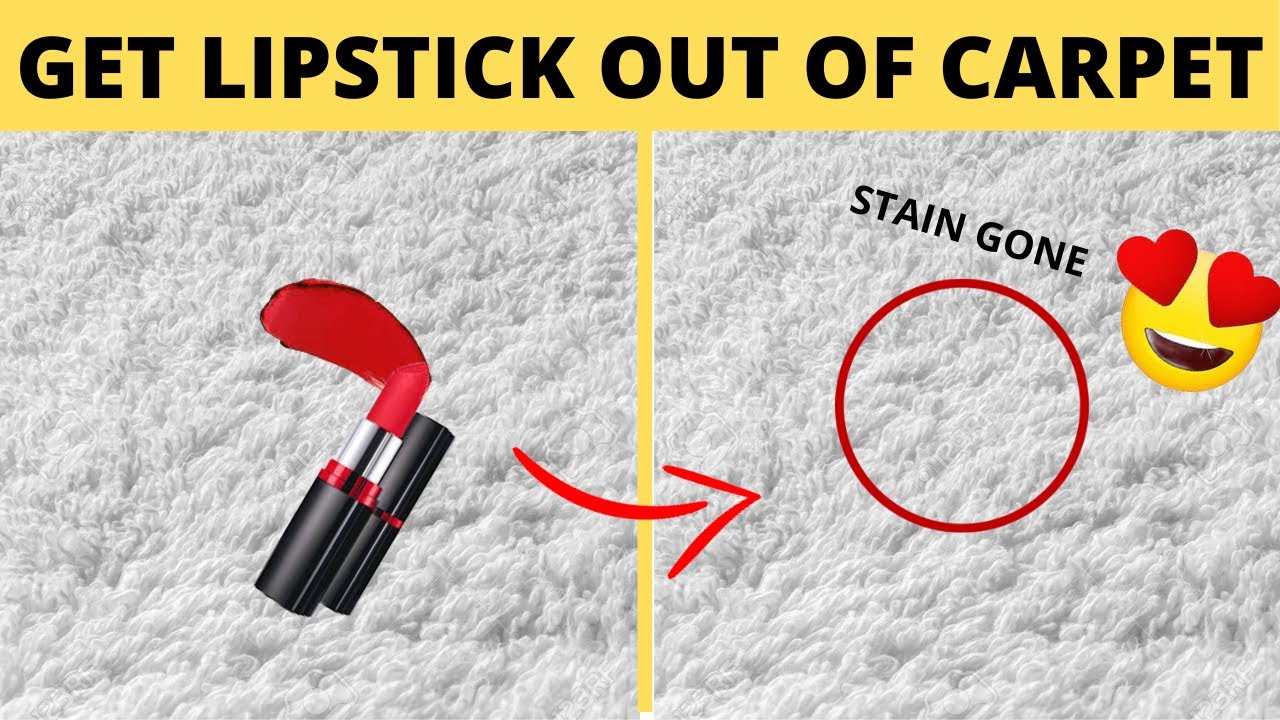
Scrape off the excess, then go in order: solvent, detergent, light rinse, dry. Blot from the edge of the stain toward the center on every pass.
Don’t put this off. The University of Illinois Extension notes that lipstick left on carpet is more likely to set the longer it sits.
- Lift the solids with the back of a spoon, moving with the direction of the pile.
- Patch test the solvent on a hidden spot first.
- Dampen a white cloth with dry-cleaning solvent, or rubbing alcohol if that is what you have. Keep the liquid on the cloth, not on the carpet.
- Press the cloth on the stain and blot inward, moving to a clean section of cloth whenever pigment transfers.
- Sponge with a mix of 1/2 teaspoon liquid dish detergent in 1 cup warm water (the University of Illinois Extension recipe for lipstick).
- Dab with a cloth wetted in cold water to lift out the soap, then press a dry white towel on top until it comes up dry.
- Point a fan at the spot, no heat, until the pile is fully dry.
CRI says to repeat the first method until the stain no longer transfers to the cleaning cloth. That’s your signal to move on to the detergent.
Scrubbing distorts the pile, according to the Extension, so tamp the cloth down instead. CRI also recommends a mist sprayer to keep from over-wetting.
A spoon beats a knife for scraping. CRI’s guidance for semi-solid spills uses a rounded spoon, and one professional spotting procedure says outright that a knife can harm the fibers.
Drying matters more than it sounds. Professional procedures, such as the one Parish Supply publishes for lipstick, dry the area immediately with no heat to prevent wicking.
Why Water Alone Fails on Lipstick
Water slides over lipstick because the stain is mostly oil and wax, with pigment suspended in it.
A 1992 European patent filing (EP 0 508 591) describes a formulation of 30% to 80% oils, 8% to 20% waxes and 3% to 30% colorants by weight. A formulation study in Cosmetics and Toiletries landed in a similar place with 50% oils, 20% waxes, 15% pigments and 15% pastes.
Oil is the largest share in both, which makes the greasy binder the first thing to deal with, not the color.
Brands blend these differently, so the ingredients in your particular lipstick change how stubborn a stain turns out. Teknoscienze’s overview of lipstick chemistry says the same: formulas vary widely, but waxes and oils make up the bulk.
Candelilla, carnauba, beeswax and ozokerite are the usual waxes, and they form the matrix that holds the stick together. On carpet they leave a film that grips the fibers.
Castor oil is the most common oil (Teknoscienze). It carries the color deeper into the pile and keeps soluble dyes in solution.
Pigments are insoluble particles and dyes are soluble. Once the binder is gone, the particles still need something to hold them in suspension while you blot.
The solvent dissolves the binder, which frees the pigment. After that the detergent keeps the pigment suspended so the cloth can pull it out.
That order is the one in the Extension’s carpet procedure, which runs dry-cleaning solvent first and detergent second. Plain water at the start only moves a stain it cannot dissolve.
Which Cleaner Works Best on Lipstick Stains?
Dry-cleaning solvent works best, with rubbing alcohol as the household substitute. A mild detergent solution cleans up whatever is left.
Everything else is a backup for when those two are missing or fail a patch test.
| Agent | Targets | Best used when | Main risk |
|---|---|---|---|
| Dry-cleaning solvent | Wax and oil binder | First pass on most fibers | Latex backing damage if it soaks through |
| Rubbing alcohol | Binder, some pigment | No spotter in the house | Dye fading on untested carpet |
| Dish soap solution | Leftover pigment | After the solvent pass | Residue that attracts soil |
| Water-based spotter (Folex) | Grease and cosmetics, per the label | Colorfast carpet that tolerates dampness | Needs a patch test first |
| Hydrogen peroxide (3%) | Stubborn red pigment | Last resort on light carpet | Lightens dye along with the stain |
Detergent choice trips people up. CRI says never to use a laundry detergent of any type, because optical brighteners can dye the fiber.
CRI’s own spot solution is light, just 1/4 teaspoon of liquid dish washing detergent per 1 cup of lukewarm water. That’s thinner than the Extension mix from the steps above, which uses 1/2 teaspoon per cup.
Some home-cleaning guides also suggest hairspray (for its alcohol content), micellar water or makeup remover to loosen the oils before a detergent pass, and baking soda or cornstarch to soak up oily residue first. All of that comes from those guides, not from the Extension procedure. Treat them as stand-ins, not first choices.
Professionals follow the same logic. Bane-Clene’s published lipstick procedure applies a solvent-based gel spotter, agitates, applies a second gel, extracts thoroughly, and brings in a red-stain remover only if color remains.
Where sources disagree on the first cleaner
The University of Illinois Extension opens its carpet procedure with dry-cleaning solvent and moves to detergent only if the stain stays.
Plenty of other sources start with water instead. Puracy leads with a detergent solution and calls alcohol workable but not the best answer, and Hasan’s Rugs runs detergent, vinegar, detergent, then water. CRI’s general spot-cleaning page doesn’t call for solvent first either. It points readers to a product with its Seal of Approval.
A few consumer guides scrape the stain and go straight to rubbing alcohol, including Flooring Clarity’s makeup-removal guides. Its lipstick guide goes the other way, though, with a mild detergent solution first and alcohol only if the stain persists.
The split exists because water-first procedures are written for every kind of spill and default to the gentlest option. Lipstick is a wax-and-oil stain, so solvent first fits it better. Switch to detergent first only when the patch test fails or the carpet label restricts solvents.
On the final rinse, CRI and the Extension both call for cold water, while COIT mixes its cleaning solutions with warm water. None of the three calls for hot water.
Matching the Method to Carpet Fiber, Backing and Dye
Most nylon, polyester and olefin carpets take a standard solvent-then-detergent routine. Wool and triexta need approved products and a lighter hand.
Check the backing before anything else. CRI says never to pour solvent directly onto carpet or let it reach the backing, because it can damage the latex.
That’s why the solvent goes on the cloth. A dampened cloth pressed on the pile delivers enough.
| Fiber | Tolerates | Watch for |
|---|---|---|
| Nylon | Solvent spotting, mild detergent | Untreated nylon absorbs oily stains |
| Wool | WoolSafe-approved spotters, wool-safe solvent | Chlorine bleach, high-alkalinity products, over-wetting |
| Polyester | Solvent spotting, detergent | Oil-loving fiber that wicks back after cleaning |
| Olefin | Most chemicals | Oil attraction, wicking, low melting point |
| Triexta | Low-residue spotters with the CRI Seal of Approval | Detergent residue, wicking |
Wool is where mistakes cost the most. Bane-Clene notes that wool holds about 30% of its weight in water, so it dries slowly and over-wetting does more harm than on synthetics.
The WoolSafe Organisation certifies carpet-care products for wool, so a WoolSafe-approved spotter is the safe pick when the label says wool.
Polyester and olefin are non-polar fibers, and Cleanfax reports that they can retain dry solvent. Blot and rinse until the solvent smell is gone.
Mohawk’s SmartStrand care sheet for triexta points to a low-residue spot remover with the CRI Seal of Approval. It also says a stain that returns (wicking) is treated by repeating the steps and blotting out all moisture.
Not sure what the fiber is? Pull a loose strand from a closet corner and drop it in a glass of water. Olefin floats, and Bane-Clene says that if the carpet is neither olefin nor wool it is usually nylon.
How to patch test a cleaner

- Pick a hidden spot of the same carpet, such as inside a closet or under a sofa.
- Put a few drops of the cleaner on the spot and blot with a clean white cloth, as CRI describes.
- Check the cloth for dye.
- Let the spot dry fully, then compare it with the carpet around it.
Test the solvent and the detergent separately, because they behave differently on dye.
Color on the cloth is the obvious sign of a failed test. Lighter or shifted carpet color after drying counts too, as does pile that turns stiff, flat or sticky.
If a cleaner fails, move to the next one on the list and test again.
How to Treat Dried or Old Lipstick Stains
Dried lipstick takes a solvent with some dwell time and several repeat passes. Expect to settle for a faint trace of color at the end.
Flooring Clarity puts the odds plainly: fresh stains have a high chance of full removal, while older ones can fade and still leave a shadow if the pigment reached deep into the fiber or backing.
A fresh stain is mostly loose binder, so the standard sequence usually finishes it. Once lipstick dries it hardens and gets harder to lift, and the James stain guide adds that old lipstick attracts dirt and turns darker and more stained.
- Scrape or vacuum the dried solids first.
- Lay a white cloth dampened with solvent over the spot and leave it to dwell.
- Lift, move to a clean part of the cloth, and repeat.
- Finish with the detergent solution and a rinse, then run the whole cycle again if color remains.
Formula changes the job too. Flooring Clarity’s makeup-removal guide flags waterproof and long-wear formulas as engineered to resist removal, so of all the different types of lipstick, expect extra cycles from those.
On light or white carpet, the last tint is the hard part. The James stain guide says a distinct color cast often remains visible on light-colored carpets.
Once the cloth stays clean, what remains is pigment lodged in the fiber or backing, so more solvent passes add risk without adding results. Flooring Clarity lists 3% hydrogen peroxide as an option for stubborn lipstick on light or colorfast carpet, and the patch test comes first.
What Makes a Lipstick Stain Permanent?
Rubbing, heat, over-wetting, bleach and leftover residue turn a removable lipstick stain into a permanent one. Each either drives the stain out of reach or damages the carpet itself.
Rubbing spreads the wax as a film and enlarges the shiny zone (James stain guide), and the Extension warns that it distorts the pile. Hot water or steam applied before the solvent can set some pigments in place.
Over-wetting is a separate problem. Consumers’ Checkbook warns that moisture reaching the backing can separate it from the secondary backing, and carpet left wet for several days can grow mildew.
Bleach and peroxide strip dye along with pigment, and dye lost to bleach can be replaced or concealed, never restored. Peroxide also weakens protein-based fibers such as wool.
Bissell’s SpotClean manual carries the same warning about wet carpet: do not overwet it.
Residue is the quiet failure. Consumers’ Checkbook lists chemicals that leave sticky residues among the problems caused by improper cleaning, and the Extension says to repeat the blotting several times to clear cleaning solution out of the pile.
Colored cloths belong on this list too. Their dye transfers into damp pile, which is why every step above uses white.
Heat is a timing question, not a ban. Flooring Clarity says steam cleaning can help after solvents have broken down the oils, but heat may set some pigments if used too early.
Olefin adds a hard limit. A Jon-Don technical sheet says to keep cleaning temperatures below 212 degrees Fahrenheit because olefin is sensitive to heat. Bane-Clene lists its melting point at about 320 degrees Fahrenheit, so the limit leaves a wide safety margin.
A stain that reappears after drying is wicking. Whittaker System explains that wicking happens when moisture penetrates the backing or padding and is not allowed to dry properly, so faster drying lowers the odds. Powr-Flite’s carpet extraction guidance likewise stresses quick drying to prevent wicking.
When Does a Lipstick Stain Need a Professional?
Hand off large or deeply set stains, and anything on wool, silk or carpet under warranty. The same goes for a tint that survives every cycle.
Flooring Clarity recommends considering professional cleaning when stains are large, deeply set or on delicate fibers.
Warranties raise the stakes. Consumers’ Checkbook reports that many newer stain-resistant carpets void their warranty if cleaned with a solution that is too alkaline or contains brightening agents.
Before paying for a visit, a stronger spotter is a reasonable next step. CRI’s Seal of Approval program, launched in 2004, tests spot removers for efficacy, resoiling, pH, optical brighteners and colorfastness to light.
| Option | Cost | Watch for |
|---|---|---|
| Portable spot cleaner | Machine purchase plus formula | Approved formula only, no over-wetting (Bissell manual) |
| Rental extractor | $30 to $50 per day, plus $10 to $25 per room for solution | Saturated backing, wicking |
| Professional spot treatment | $25 to $300 as an add-on, depending on severity | Patch test, IICRC S100 compliance |
Rental figures come from Angi, and the stain-removal add-on from Housecall Pro’s 2026 pricing guide.
The rental price assumes a whole-room job, since a rental machine is a day’s hire. The stain-removal add-on is billed by severity alongside a cleaning. For a single lipstick spot, neither is worth it until the solvent-and-detergent cycle has failed.
If you do book someone, ask whether they’ll patch test before treating the stain and what the limits of removal are on your fiber. It’s also worth asking if they work to ANSI/IICRC S100, the standard for professional carpet cleaning.
The IICRC published the seventh edition of S100 in 2021, and its scope includes spot and stain removal.
Common Questions About Lipstick Stains on Carpet
Do baking soda and vinegar remove lipstick from carpet?
Not as a stand-alone fix. Neither dissolves the wax binder, so a solvent still has to go first.
Keep baking soda off wool. ISSA’s carpet-care guidance traces wool’s cleaning challenges to alkalinity.
Can a steam cleaner remove lipstick from carpet?
Not on its own, because oily stains usually need solvent pre-treatment first.
A steam cleaner that leaves the pile damp also invites wicking. Whittaker System says even steam cleaning can cause it when the carpet does not dry properly.
Is the method the same for an area rug?
Largely yes. The CRI spot-cleaning guide that rug retailers publish uses the same method: work from the edge of the stain inward and repeat until nothing transfers to the cloth.
Check the rug’s fiber and dye first. Flooring Clarity advises consulting a professional before treating delicate or antique carpets.
Does stain-resistant carpet need a different cleaning method?
The sequence stays the same, but the choice of product tightens. Flooring Clarity advises testing an unseen area first and avoiding harsh chemicals, and warns that isopropyl alcohol can affect some dyes or finishes.
Pick a spot remover with the CRI Seal of Approval and follow the manufacturer’s care instructions.
How do you keep lipstick off carpet?
Apply lipstick away from carpeted areas and use a tissue while you do, which is the prevention tip Flooring Clarity gives.
Capping the tube before you set it down removes the risk of a dropped smear.
Aftercare for Lipstick Stains on Carpet
A treated lipstick stain is finished when the spot is fully dry and the color hasn’t wicked back. Color shifts and wicking only show once the pile is dry, so judge the result then.
Run a fan or air mover over the spot, then inspect it after the pile dries. If color comes back, repeat the sequence.
Drying comes first since moisture left in the backing carries pigment back up the fibers. Once it’s dry, the spot shows its true color, and any repeat cycle starts from a clean baseline.
The downside is waiting for the spot to dry before calling it done. A patch stays visible longer, but you avoid re-treating a stain that was never finished.
The IICRC has begun revising its 2021 ANSI/IICRC S100 standard, so professional-cleaning advice that cites it should be rechecked against the new edition. Position verified October 2026.

She started writing on the site after fielding the same questions from clients and friends often enough to just write the answers down: which red won't turn orange on a warm undertone, how to keep lipstick from feathering into fine lines, why a "12-hour" formula rarely survives dinner.
Every review on the site follows the same rule she uses with paying clients: wear it first, then decide if it's worth recommending.
- How to Make Eyeliner Last Longer Without Smudging - August 31, 2026
- How to Make Eyeshadow Last Longer All Day - August 29, 2026
- How to Find Your Undertone in 5 Easy Steps - August 27, 2026