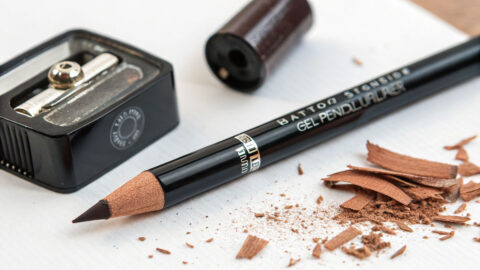
Turn the Maybelline Lifter Liner gently in a cosmetic sharpener, and give it a short stay in the fridge first so the formula firms up. The pencil doesn’t twist up, which means the sharpener is the only way to reach more product.
Maybelline’s product page (checked October 2026) says to use a cosmetic-grade sharpener and twist gently so the pencil doesn’t break. It says nothing about chilling.
That gap matters. Slashed Beauty’s 2025 review found the tip crumbling inside the sharpener and falling out, while other buyers had no trouble at all.
How to Sharpen the Maybelline Lifter Liner

Chill the pencil in the fridge for 5 to 10 minutes, then turn it slowly in a cosmetic sharpener with a light hand. A Lyko customer service reply gives that method on the retailer’s Lifter Liner page, and it lines up with Maybelline’s own advice about the sharpener and the gentle twist.
As of October 2026, Maybelline’s product page calls the Lifter Liner a traditional sharpenable pencil in a plastic casing. There’s no twist-up mechanism. Maybelline lists the pencil at 3.315 x 0.362 x 0.362 inches and 0.042 oz, so the diameter is about 9.2 mm. You’ll want a cosmetic sharpener with a clean blade, and the Maybelline Expert Tools Dual Sharpener is a reasonable pick since the brand says it handles eye and lip pencils.
- Put the pencil in the fridge for 5 to 10 minutes so the formula firms up.
- Empty the sharpener first. Lyko’s customer service warns that old debris gets pushed back into the blade.
- Insert the tip and turn slowly, pulling a few times rather than pressing hard.
- Stop once the point looks even, and check it before it touches your lips. The same Lyko reply suggests testing that the tip comes out clean.
- If the pencil feels stiff from the cold, roll it between your fingertips for a few seconds.
Maybelline gives no insertion depth for the Lifter Liner. For its Line Express wood eyeliner, the brand’s customer reply says no more than 1/4 inch into the sharpener and 3 or 4 gentle turns, which makes a reasonable reference point here.
Most of the technique carries over from other pencils, and these general rules for sharpening lip liner cover the parts that aren’t specific to this product.
For the application side, this guide to applying lip liner picks up where sharpening stops.
Why Does the Maybelline Lifter Liner Tip Crumble in the Sharpener?
The formula is soft, and soft pencils tend to snap under the blade instead of shaving into a point. Maybelline sells that softness as a selling point (creamy, glides on with no tugging), and reviewers run into the downside at the sharpener.
What the formula tells you

The US ingredient list opens with isododecane, synthetic wax and polybutene. Hydrogenated jojoba oil and sodium hyaluronate sit further down. The casing is plastic, not wood.
No published source ties the breakage to a single ingredient. What reviewers describe is texture.
What reviewers report
Slashed Beauty’s 2025 review names sharpening as the pencil’s major flaw. The tip crumbled inside the sharpener and fell out, so the liner kept getting shorter without the point getting any longer.
Commenters on that reviewer’s YouTube video described the same thing, and some threw the pencil away after sharpening it all the way down. Others had no trouble, and the problem didn’t follow any one shade.
A Skroutz reviewer says the tip breaks with every sharpening. A Lyko reviewer sees it break off sometimes, “just like other lip liners”. Over on Maybelline.ca, one reviewer calls the pencil easy to sharpen.
So the brand and part of its audience disagree. Maybelline says gentle twisting avoids breakage, a share of buyers report breakage anyway, and no source measures how big that share is.
Buyers of the brand’s gel eyeliner report the same breakage on retailer pages, and this walkthrough on sharpening the Tattoo Studio gel pencil liner covers that product.
Chilling the Maybelline Lifter Liner Before Sharpening: Fridge or Freezer

Every source that addresses chilling says it helps. They disagree on the details, with 5 to 10 minutes in the fridge from Lyko customer service and 10 to 20 minutes in the freezer from a beauty creator’s post.
| Method | Reported time | Source |
|---|---|---|
| Fridge | 5 to 10 minutes | Lyko, Lifter Liner product page |
| Fridge | About 10 minutes | Beauty Bible, 2017 |
| Freezer | 10 to 20 minutes | Lemon8 creator post |
| No chilling | None mentioned | Maybelline product page, October 2026 |
A cold pencil is harder, so the blade shaves it instead of snapping it. A Sephora community member makes the same point, saying cold product is more likely to shave than break off.
Maybelline’s page says nothing about chilling, so this is user advice and not a brand instruction. Only the Lyko advice and the Slashed Beauty commenters (some of whom report good freezer results) refer to the Lifter Liner itself.
Start with the fridge. Move to the freezer only if the tip still crumbles, since the freezer time comes from a generic post and not from testing on this pencil.
A chilled pencil can feel stiff on first use. Beauty Bible suggests rolling it between your fingertips to soften it, then wiping off any marks left on the skin.
No source measures how much chilling cuts breakage, so treat every time in the table as a starting point.
Choosing a Sharpener for a Soft Lip Liner

Use a cosmetic sharpener with a sharp, clean blade, and start with the cheap one. The Maybelline Expert Tools Dual Sharpener costs $3.99 on the brand’s site and is sold for eye and lip pencils.
| Type | Example | Limit |
|---|---|---|
| Brand dual sharpener | Maybelline Expert Tools Dual Sharpener | No hole size published |
| Double-blade soft-liner sharpener | ARTDECO Sharper Magic Liner, A$8.95 at Choice Pharmacy (Australia) | Sold for ARTDECO and medium-width pencils |
| Two-hole sharpener | Esum Pro Dual Pencil Sharpener | Second hole is for chubby pencils |
| Writing-pencil sharpener | Standard desk model | Red Apple Lipstick says it works differently from a cosmetic one |
ARTDECO’s pitch is a second blade that rounds the tip of soft liners, plus a container for shavings and a cleaning stick.
Blade fit matters more than the logo on the packaging. Neither Maybelline’s pencil page nor its sharpener page gives a hole size for the Lifter Liner, so check that the pencil seats without wobbling before you trust any model.
I’d try Maybelline’s $3.99 sharpener first and only buy a double-blade model if the tip still crumbles after chilling. No source compares the two on this pencil, so that’s a judgment call.
When Sharpening the Maybelline Lifter Liner Fails
Two different problems get lumped together here. A tip that crumbles on every pass can sometimes be worked around, while a pencil that arrives broken goes back to the store.
When the tip keeps crumbling
Red Apple Lipstick’s sharpener is built to leave a rounded point on its pencils, and the Esum sharpener has a tip former for the same job. A rounded tip is less fragile than a fine one.
Maybelline’s own application steps use the side of the tip for wider coverage, so a blunt point still lines and fills. Swapping blades doesn’t always help, though. A Walmart reviewer of another Maybelline pencil bought three sharpeners and still saw the lead break off sometimes.
No source documents any of this rescuing a pencil that crumbles on every pass. Treat it as a way to keep using the liner, not a repair.
When the pencil is defective
Some buyers report damage before the sharpener ever comes out. A Maybelline.ca reviewer says the tip broke off immediately, then tried turning the pencil up for more product (this pencil does not twist up). Another says the tip was already broken on opening, and sharpening scattered crumbs everywhere.
Slashed Beauty’s advice for a pencil that won’t sharpen is to exchange or return it. A broken tip out of the packaging fits that advice better than any technique fix.
How to Clean the Sharpener Between Lip Colors
Empty the shavings after every use, then wipe the blade and inner compartment with a cotton swab dipped in isopropyl alcohol. That routine comes from Rebecca Restrepo, global makeup artist for Elizabeth Arden, in a Beautylish piece on sharpener upkeep.
The sharpeners themselves help to different degrees. The Maybelline Expert Tools Dual Sharpener has a snap-on top that holds the shavings, and Maybelline says to lift it and empty it after each use. ARTDECO’s Sharper Magic Liner comes with a cleaning stick for residue, and the Esum Pro Dual Pencil Sharpener has a cleaning pick, after which you wipe and sanitize with alcohol. Kevyn Aucoin’s Precision Pencil Sharpener uses a removable red stick that pushes shavings out.
Keep one sharpener for lip pencils only. A Bustle writer does this so chunks of black eyeliner never land on a pink liner.
On replacement, the sources split. Esum says to swap a sharpener yearly for a sharp blade, while Restrepo says a clean one lasts relatively long even with shavings built up.
She does say to throw it out right away after an eye infection or a breakout near the lips.
Maybelline Lifter Liner Sharpening FAQ
Does the shade change how well the Maybelline Lifter Liner sharpens?
No. Slashed Beauty reports mixed sharpening results with no specific shade behind the problem.
A Lyko reviewer saw the tip break off now and then in Line Leader, so the shade name is not a reliable predictor.
How often should I sharpen the Lifter Liner?

Sharpen when the tip is worn down, which is the rule Lyko’s customer service gives for pencils of this type. Maybelline publishes no schedule.
Reviewers report wasted product whenever a tip breaks, so sharpening more often than needed costs you pencil.
Can I sharpen it without a sharpener?

Maybelline says to use a cosmetic sharpener, and no brand source backs another method.
One generic lip liner guide suggests pressing the pencil between scissor blades, but nobody has tested that on this pencil.
Can an old Lifter Liner crumble because it has expired?
Yes, crumbling is one of the signs. Maybelline puts the pencil’s life at about 24 months after opening and up to 3 years unopened.
The brand also lists dryness and pigment that gets harder to blend as reasons to replace it, and advises a cool, dry spot with the cap closed.
Does the plastic casing make the pencil harder to sharpen?
Not clearly. Maybelline describes the pencil as plastic-encased, and one UK reviewer expects plastic casings to sharpen unevenly.
Slashed Beauty found the casing sharpened fine while the tip crumbled, which puts the problem in the tip and not the casing.
Is the Maybelline Lifter Liner Worth the Sharpening Effort?
For most buyers, yes, because the sharpening problem has fixes that cost little. Of 4,285 reviews on Maybelline.ca, 3,484 give five stars (retrieved October 2026).
Chill the pencil first, since it’s the cheapest and most reversible fix. If it still crumbles, switch to a clean cosmetic sharpener, and exchange the pencil if even that fails.
Stop swapping tools once a chilled pencil still crumbles in a clean cosmetic sharpener. One Walmart reviewer saw breakage after buying three sharpeners, and Skroutz reviewers report that each broken tip wastes product.
A twist-up liner ends the sharpening but gives up the fine point, according to a Sephora community member. Shoppers who switch can compare formats in this guide to choosing a lip liner.
This position holds as of October 2026 and changes if Maybelline adds chilling guidance or reformulates the pencil.

She started writing on the site after fielding the same questions from clients and friends often enough to just write the answers down: which red won't turn orange on a warm undertone, how to keep lipstick from feathering into fine lines, why a "12-hour" formula rarely survives dinner.
Every review on the site follows the same rule she uses with paying clients: wear it first, then decide if it's worth recommending.
- How to Make Eyeliner Last Longer Without Smudging - August 31, 2026
- How to Make Eyeshadow Last Longer All Day - August 29, 2026
- How to Find Your Undertone in 5 Easy Steps - August 27, 2026